


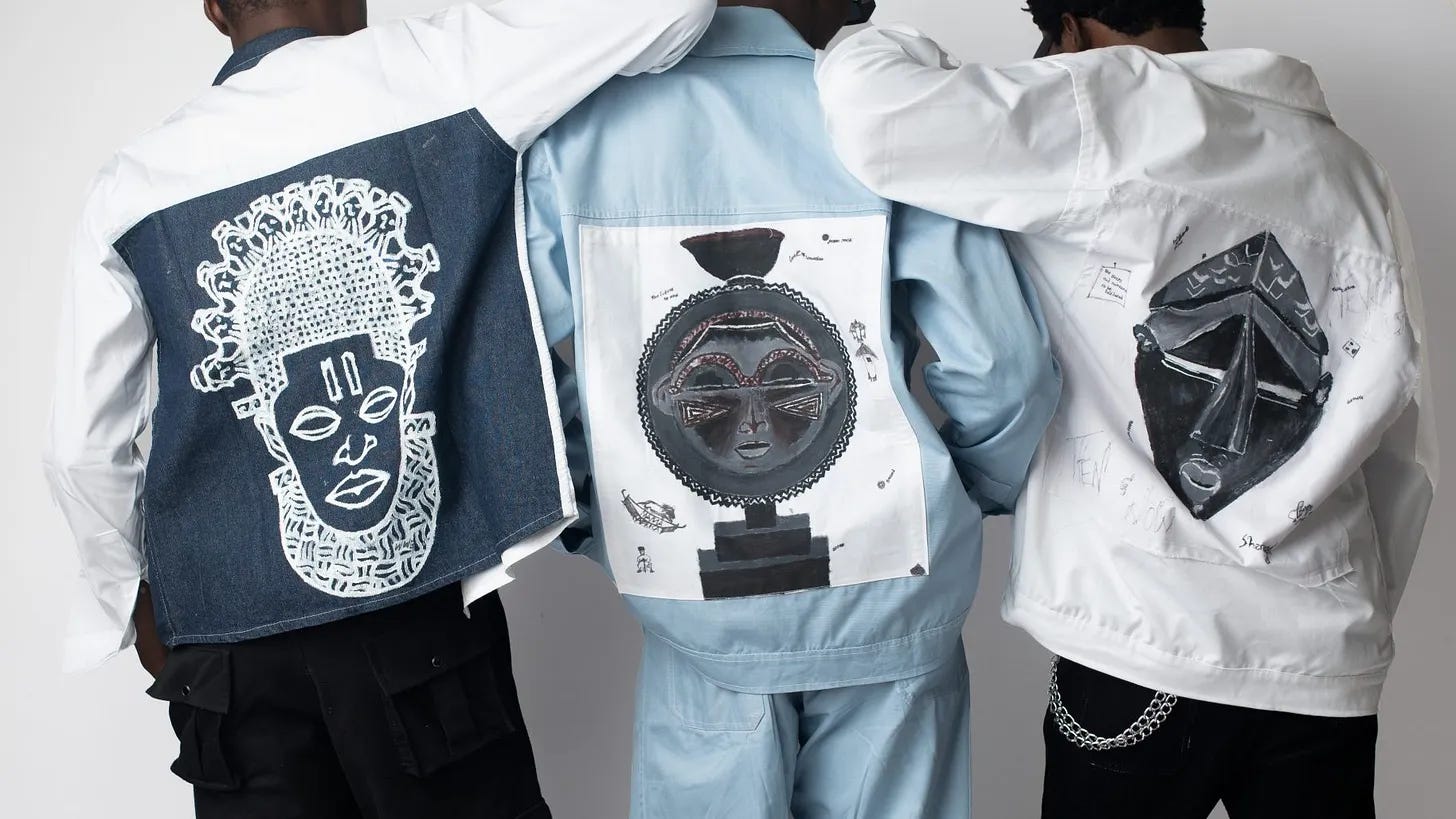
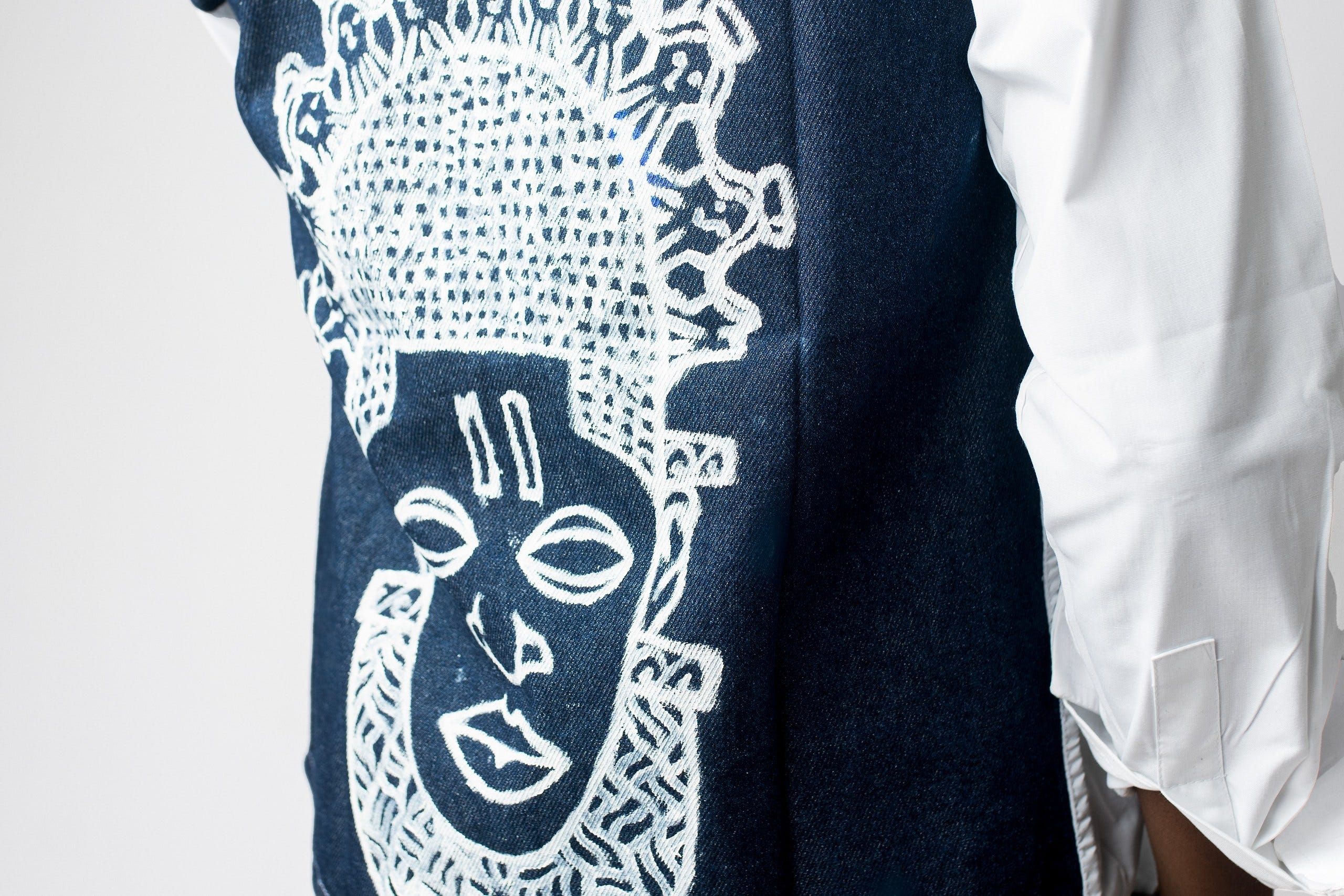
There is a way of keeping history that does not involve a museum. In Abuja, a designer draws an ancient artifact by hand, digitizes the drawing, and prints it into a pattern you can put on your body and walk out the door in. The object stays behind glass somewhere, if it survived at all. The memory of it goes to a party.
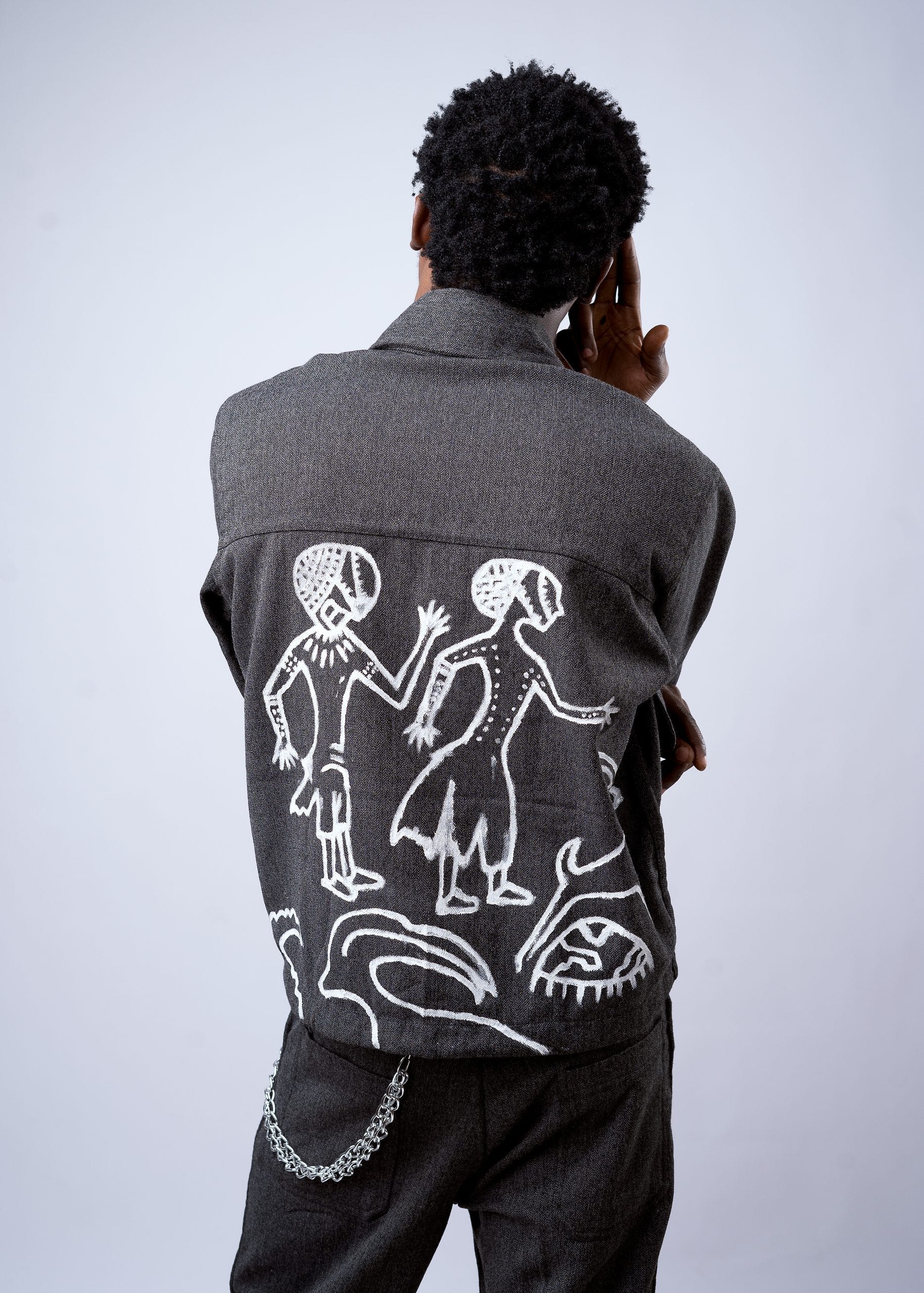
That is the premise of the HERITAGE COLLECTION, a thirty-piece fashion line and live showcase by the Nigerian designer, fine artist, and musician who goes by Gneric. Each garment carries an ancient African artifact, hand-drawn and then digitized, and each design is minted on the blockchain as a permanent record of the story it holds. “It's a form of cultural preservation using the blockchain and using fashion as a medium to do that,” she says.
Gneric on the Heritage Collection, recorded for her Artizen impact report.
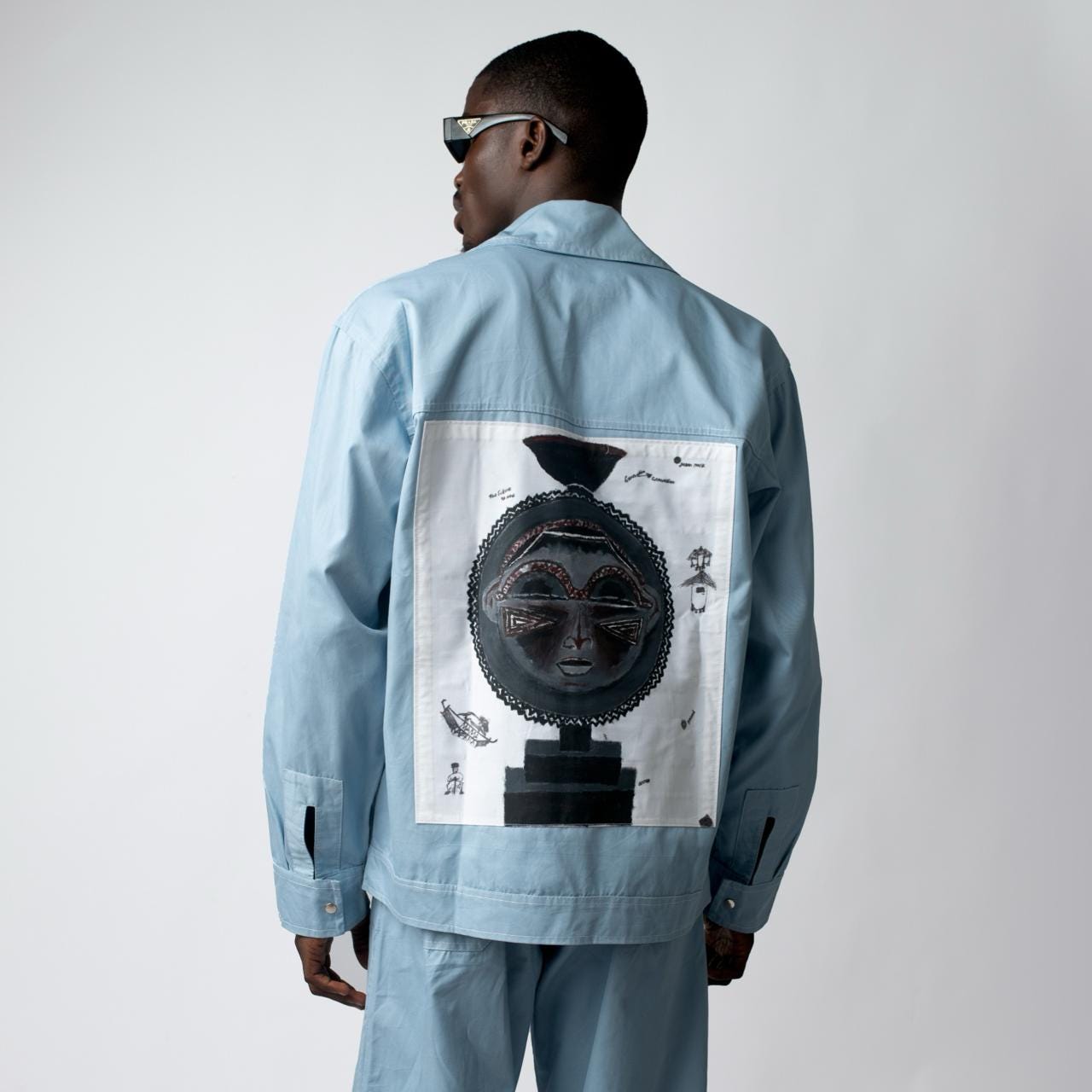
Gneric runs a clothing brand called Vibes & Styles, and the Heritage Collection is the brand's thesis stated at full volume. Africa has always told its stories through the way its people weave, carve, sculpt, and adorn. The collection treats those forms as source texts. Pieces carry names like Rhythms of Gabon, Woven Wisdom, and Echoes of Benin, and the studio describes them as time capsules: symbols and tools once used to create, protect, and celebrate life, redrawn stroke by stroke into patterns that can travel.
It's a way of preserving African identity.
The Designer Who Sings
The Artizen project is not only a clothing line. It is a show. Gneric's vision folds fashion, live music, and blockchain education into one evening: models in the Heritage pieces, live instruments on stage, her own songs in the set, and the stories behind the artifacts told out loud between them. She has already hosted what she calls Abuja's one of a kind indie fashion and music showcase, co-hosted a skate and jazz event with a fashion show inside it, and thrown a listening party for her EP, I Found My Sound.


The range is the point. Ask her why she is the right person to make this and the answer is a resume that refuses to pick a lane: “Because I'm a fashion designer and I run a brand called Vibes and Styles Clothing, and also a fine artist.” The hand that drew the artifacts is the same hand that cut the garments, and the voice explaining the blockchain from the stage is the one that was just singing.
SuperBio, who walked in the showcase as a model, felt it from inside the room: “Being part of the Heritage Collection as a model was a great new experience for me. I love how Gneric connects fashion with culture. What stuck with me from the showcase was how powerful community can be when we choose to support and contribute to our cause.”
Sparks Music, the showcase’s official DJ, built the sound to match: “For the Heritage Collection runway I built a set that fused classic Afrobeat and Amapiano rhythms with deep electronic house and subtle traditional percussion. The room felt charged as the music and fashion locked into the same cultural pulse that night.”
The Digital Twin
Every physical piece in the collection has a double. When a collector buys a Heritage garment, the design's digital twin is minted on the blockchain as an NFT, which gives the owner proof of authenticity and a permanent link to the story of the artifact the piece is built from. Collectors join a community the brand calls Vibers. Some hold pieces of a collectors' scroll, an NFT edition issued alongside the garments.
So far I have real people that own real pieces of the heritage collection.
This is where the project earns the word preservation. Fabric frays and museums burn, but a minted record with the story attached is designed to outlast both the garment and the marketing cycle around it. Those collectors, she says, “also have a digital twin of those pieces that are minted on the blockchain to prove authenticity, to prove ownership, and to also connect them to the stories of those ancient African artifacts.”
Zaal Panthaki, founder of The ZAO and one of the collectors who holds part of the scroll, has known the work longer than most: “Gneric has been part of our community for over two years, building in fashion long before I knew her. She makes things happen: I just received a jacket I bought all the way from Africa. She is a fighter and will persevere through any challenge.”


A Room at the French Institute
Since the project's last funding round, the collection has grown in both size and reach. Gneric has been researching and adding new designs, and layering in augmented reality, so a phone held over a garment can open the story behind the pattern. The work showed publicly at a digital art exhibition at the French Institute, where visitors moved through the pieces, tried the AR, and got a feel for what owning one actually means.
What I’ve learnt so far is the connections between tribes across Africa and the similarities in our cultures.
The research changed the researcher. What began as a way to preserve individual artifacts has become a map of something larger.
What the Money Did
The Heritage Collection has now raised funding on Artizen across three seasons. In Season 5 it raised $11,014.29. In Season 6, its breakout season, collectors bought $5,960 in Artifacts, and the project unlocked $24,630.59 in matching funds for over $30,000 in funding. Season 7 has added $16,380 so far, bringing the project's all-time total on Artizen to $58,014.90 as of August 28, 2026.
For an independent designer in Abuja, that is the difference between a lookbook and a live show with a band, between a sketchbook of artifacts and a thirty-piece collection with AR built in and its records minted. It buys the room, the stage, the instruments, and the time to keep drawing.
The Archive That Walks
The deep bet inside the Heritage Collection is that culture survives best when it circulates. A pattern locked in an archive is safe and invisible. A pattern on a jacket at a show in Abuja, with the story minted behind it and a stranger asking where it came from, is alive. Gneric's project moves African heritage into the second category and gives it a receipt.
Itohan Okoh, who photographed the collection, put it this way: “Photographing the Heritage Collection reminded me that fashion can tell stories without saying a word. The more time I spent capturing the pieces, the more I noticed how every detail carried a sense of history, intention, and identity. It felt like capturing something that was meant to be remembered.”
“This project helps people value African art, music, and stories,” she writes on the project page. “It gives artists a place to be seen, earn, and grow.” The show is scheduled to keep growing with the collection, and the collection, its maker promises, is still being drawn.
Gneric's quotes are drawn from her recorded interview and written impact report, lightly edited for clarity. The HERITAGE COLLECTION is raising on Artizen now. Explore the collection at Vibes & Styles, and follow Gneric on YouTube.