



Most fund directors on Artizen will tell you about their curation criteria. Bahr Gottesfeld will tell you about a dream.
She wrote it down in August 2026: “I woke up from an actual dream. I dreamed of a nomadic village that will cross rivers and seas, mountains and deserts, that will be inspired and opened by the great forces of Gaia. A team of researchers to collaborate on a shared quest in the midst of the wild, asking together - what else is out there?”
The dream became a project, Tena, a six-month walk along the Pacific Crest Trail beginning April 2027, from the border of Mexico to the border of Canada, with a village that moves. But first the dream turned a creator into a funder. Bahr opened the Technopenuriaphobia Fund for Human Connection, which she describes as a community for “people that take a stand for physical, face-to-face human connection to be happening in collaboration with Gaia.”
The name is borrowed. Technopenuriaphobia is Clinton Callahan's word for the fear of being without modern technology, the low hum of panic when the signal drops. The fund is built for the cure: projects that happen offline, near the living world, where people meet in the flesh and make something together.
Twenty-Two Calls
Then she did something almost no one running a fund does. She got on a call with every creator who submitted. “I had 22 calls with project managers from 5 different continents. I put myself in the exact job where I can do what I love. I call people and I ask them what they envision to be possible in the world, I ask them what do they dream of, I ask them what they need to make their dream possible, I ask them how can I be on their team, I give them experiments, I invite them to take the next step to widen their visibility, I let myself be inspired and touched, I let myself be nourished and loved.”
There is no scorecard in that sentence. For Bahr, curation is not a filter projects pass through. It is a relationship that starts on the first call.
“I got the opportunity once again, not an accident, not a coincidence, an opportunity, to be the wind in people's sails.”
Forty projects have been curated into the fund so far, from two seasons of submissions, and they share almost nothing in medium. What they share is a space with people in it.


The Homework
The calls come with assignments. Ibrahim Abba Mahmud, a photographer in Nigeria, “fell in love with the simple nature that exists always all around. He takes pictures of trees and flowers, bugs and bees.” On their first call Bahr asked him: “if you take your project to the next level and you let yourself also touch others and the world, what would you do?” He said he longed to invite people to slow down, to notice, to connect to each other and to what grows around them.
So she gave him homework: “by next week bring together at least 4 more people to do exactly that. Invite them to slow down, to go on a street photoshoot together, invite them for what you see can be possible.” Five days later the photographs arrived. His project, In Bloom, A Macro Study, a close-up study of the hidden architecture of flowers, has raised $3,400 toward a $5,000 goal on Artizen. It now comes with something no macro lens can hold: a handful of people in a Nigerian street, looking at the same flower at the same time.
In Mexico, Margarita Trabulse, a deep diver, is working to heal the cenotes, the freshwater sinkholes of the Yucatán that Mayan communities drink from and that farm runoff has been poisoning. CEM1: Cleaning cenotes with effective organisms seeds the water with non-invasive microorganisms that eat the contamination; it has raised $13,070 across two seasons on Artizen. The part Bahr lingers on is the people: “She holds space for the local teenagers to learn how to deep dive, so that they fall in love with the place, already taking a stand themselves to clean it and protect the natural beauty of their home.”
“She is an incredibly inspiring woman, who cared enough to do something about her pain.”
In Kigali, Rwanda, a nineteen-year-old named Wisdom is building Sturbon, a free platform that pairs young Africans who feel alone with counselors, and with mentors who stay. Its logline is a single breath: “I almost gave up at 13. Sturbon is the app I needed, built for every African teenager who is there now.” Sturbon is one of the newest arrivals in the fund and has raised its first $40. Bahr's response to it is the kind of thing a scorecard has no row for: “I have tears come up as I write his creation.”
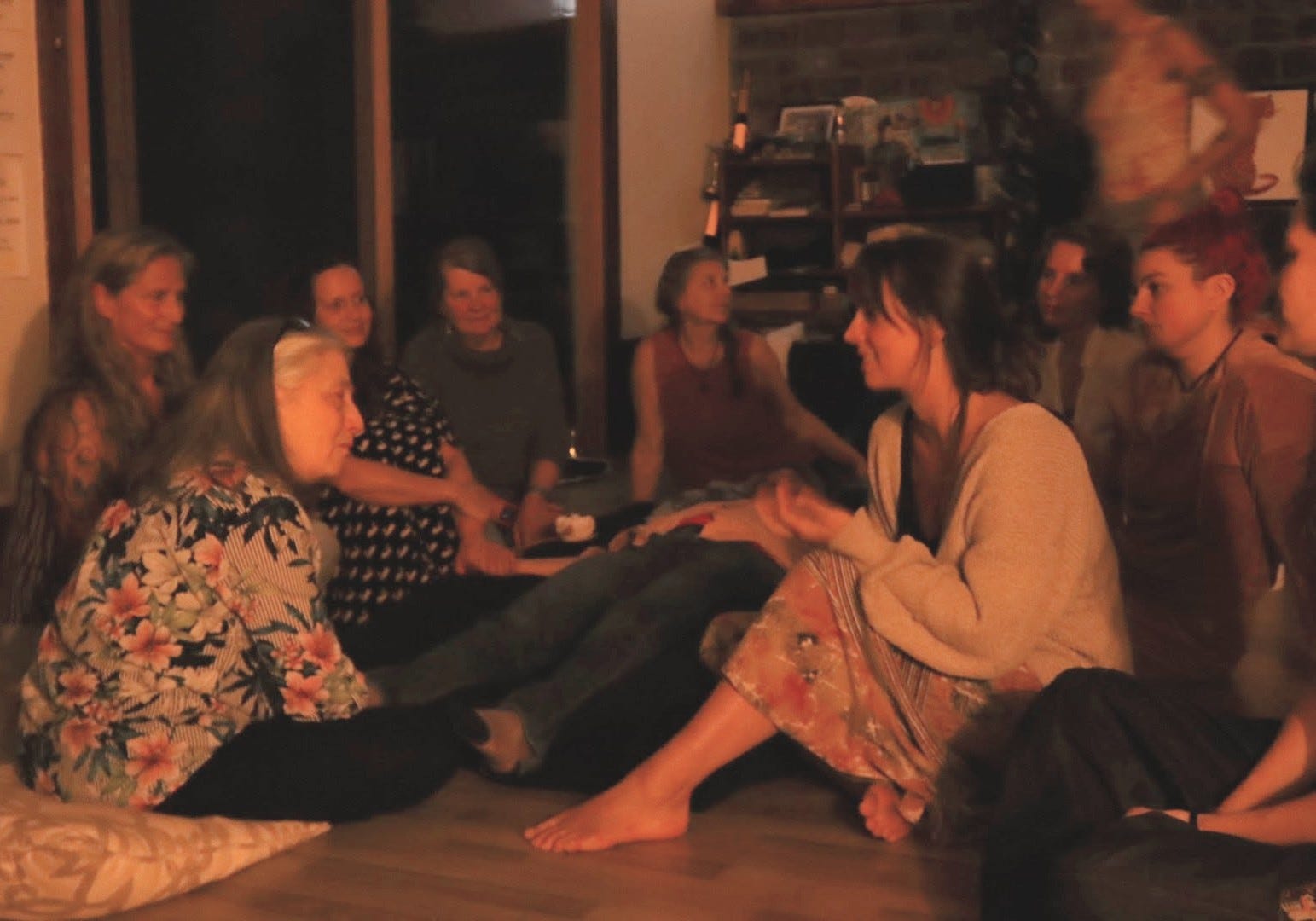
Then there is Tena itself, a 4,000-kilometer walk with a moving village of researchers, which has raised $10,676 toward a $40,000 goal and leaves in April 2027. The fund is how Bahr made sure the rest of the village had a way to find each other first.
Tomatoes and Made-Up Numbers
Bahr has been arguing with money since she was small. “I remember sitting on the kitchen table with my mother, around the age of 7 and asking her - how can it be that she brings food home with numbers on the screen?” The woman at the market handed over tomatoes and received paper, and nobody else thought this was strange.
“The power of money is purely relying on the power we attach to it.”
She writes: “It is just that it made so much more sense to me that the value of love would be higher than the value of made-up numbers in a bank account. That collaboration and creation would be the value that I seek.”
What she found on Artizen was not a way around money but a different way of holding it. “It is first of all a community, then it is a fundraising platform.” She calls it “a base ground, a jumping start to relate to money differently. To play a winning game, to support each other to succeed, to cheer each other on, to collaborate on our creations and dreams.”


Behind the fund's forty curated projects stands a $21,346 pool, as of early September 2026. When a supporter buys an artifact from one of those projects during a fund drive, the pool matches the purchase, so a small act of belief from one fan becomes a larger stake in a walk, a cenote, a photograph, a listening ear. The mechanics take a sentence. What they did to Bahr took twenty-two calls: “I find that the entire money part is no longer concerning me.”
What Else Can Be Possible?
“I see it becoming less and less about the money and more and more about collaboration. I see us exchanging our gifts with one another. So many of the things I would need money for would not be relevant because my friends from Rwanda have them for me. Because I have the things they need for them.”
The fund does not ask its creators to prove that face-to-face connection scales. It asks them to go and have some, outdoors, with other people, and to bring back what they found.
“We can potentially reinvent an entire economic ecosystem. Where non-material value prevails.”
An Open Call
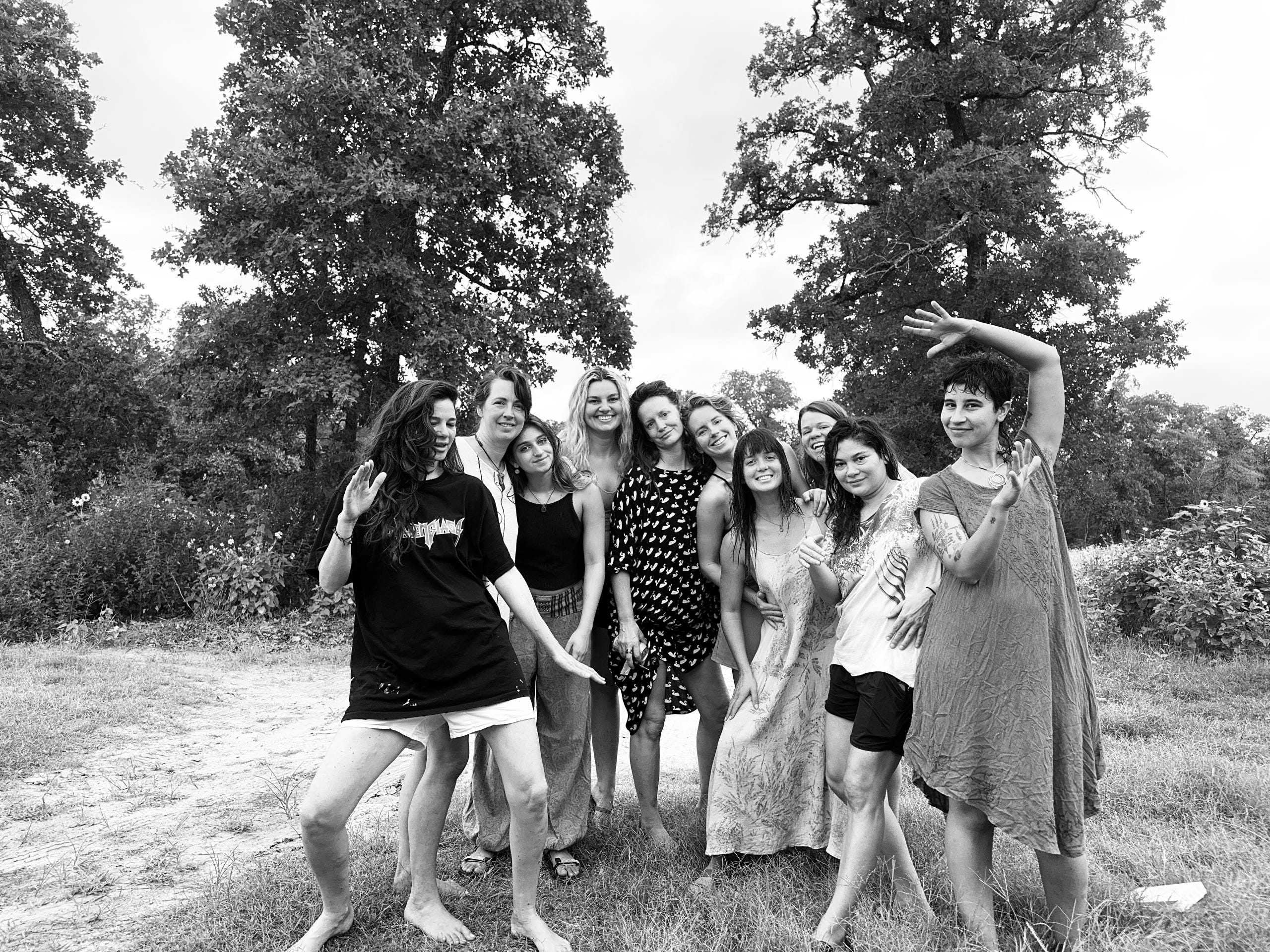
If you are making something that only works when people are in the same place, this fund was built for you. A gathering in a forest. A walk with strangers who become a village. A dive class that turns teenagers into guardians of their own water. A circle on a floor where someone finally says the thing out loud. The rules are simple: it happens offline and face to face, connection is the point rather than the byproduct, the living world is somewhere in the frame, and the people who come do not just watch, they make.
Submitting takes a project page and a few plain paragraphs about why you fit. The Artizen Playbook walks you through it, and the fund page has a Submit button waiting. Expect a phone call. Expect to be asked what you dream of, what you need, and how she can be on your team. Expect homework.
And if you are not a creator but you know one, the friend who keeps pulling everyone outside, who believes a room full of people is worth more than a feed full of them, send them this. Somewhere right now Bahr is on a call with a stranger, asking what else is out there. The fund exists so that more of us go and look.
The Technopenuriaphobia Fund for Human Connection is live on Artizen, curated by Bahr Gottesfeld. Creators can submit projects directly on the fund page; sponsors can grow the matching pool there too. Words in quotation marks are Bahr's own, unedited, from the essay she wrote for her readers in August 2026, “The Next Economic Ecosystem”; Sturbon's logline is quoted from its project page. Photographs courtesy of Bahr Gottesfeld. Funding figures as of September 2, 2026.
The pictures are from our epic cross country iContact tour! Visiting sacred and also mundane spots along the way, engaging in No Tech No Time and being with the Land and one another!
Bahr!! So inspiring to remember those moments where tech or time didn’t exist in our existence and just connection, creation and Gaia immersion was the source of our inner journey. Thanks for existing in dimension