


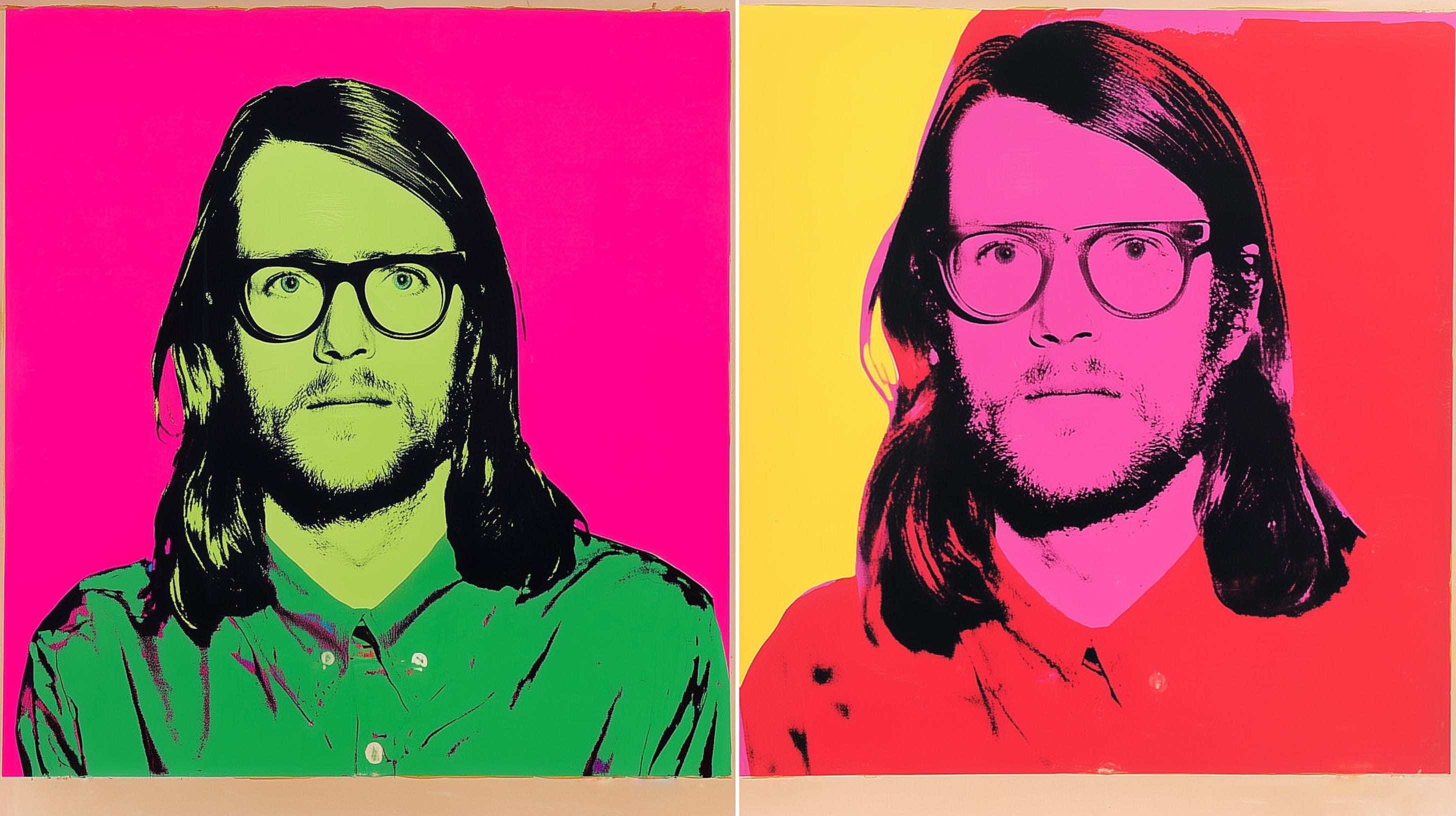
Kevin Owocki sits at the fault line between idealism and infrastructure.
As the founder of Gitcoin, he helped turn a simple question—how do we fund public goods?—into one of the most important experiments in crypto. Gitcoin pioneered quadratic funding, moved millions of dollars to open-source developers, and proved that coordination at internet scale is possible when incentives are designed with care.
But Kevin isn’t interested in abstract theory. He’s interested in what works. What lasts. What actually gets built when hype fades and builders remain.
In this conversation, we talk about funding as a form of values, why public goods are chronically underfunded, and what it takes to design systems that reward contribution instead of extraction.
Here are the sharpest insights from our conversation.
1. Funding is a moral choice.
“Every funding mechanism encodes values. You’re deciding—explicitly or implicitly—what you want more of in the world.”
Markets aren’t neutral. Neither are grants, DAOs, or protocols. Every system rewards some behaviors and suppresses others. Kevin’s core insight is simple but uncomfortable: if we don’t like the outcomes, it’s because we don’t like the incentives we designed.
Public goods don’t fail because people don’t care. They fail because the systems around them don’t pay.
2. Public goods are everywhere—and almost nowhere funded.
“So much of what we rely on every day is maintained by volunteers, underpaid contributors, or pure altruism.”
Open-source software. Digital infrastructure. Cultural commons. These are foundational layers of modern life, yet they survive on scraps. Kevin sees this as a systemic blind spot: capitalism is good at pricing exclusion, terrible at pricing shared value.
Gitcoin wasn’t built to fix everything. It was built to test whether better funding primitives could change that equation.
3. Quadratic funding works—but only if people show up.
“Quadratic funding doesn’t replace community. It amplifies it.”
Math alone doesn’t save public goods. Participation does. Quadratic funding is powerful because it weights broad support over concentrated capital—but only when real humans engage.
Without community, even the most elegant mechanism collapses into abstraction.
4. Governance is a social problem before it’s a technical one.
“You can’t engineer trust purely in code. People matter.”
Kevin is blunt about this. Protocols can help. Smart contracts can enforce rules. But legitimacy comes from social consensus—shared norms, accountability, and culture.
This is why Gitcoin evolved beyond grants into governance experiments, reputation systems, and new forms of coordination. Code sets the floor. People set the ceiling.
5. Regenerative systems reward contribution, not extraction.
“If the system only rewards taking, that’s what you’ll get.”
Kevin distinguishes extractive systems—where value is siphoned upward—from regenerative ones, where value circulates back to contributors. The difference isn’t philosophical. It’s architectural.
Regenerative systems don’t just fund outputs. They sustain the people doing the work.
6. Builders stay when the hype leaves.
“The real signal is who’s still here when it’s not cool anymore.”
Cycles come and go. Narratives inflate and collapse. What remains are the builders who care more about the work than the spotlight.
Kevin measures success less by market caps and more by continuity—projects that keep shipping, communities that keep showing up, systems that quietly compound.
That’s how public goods survive: not through spectacle, but through persistence.
Closing thought
Kevin Owocki doesn’t talk about funding as charity. He talks about it as design.
Designing systems that make it easier to do the right thing.
Designing incentives that align individual action with collective good.
Designing markets that can finally see what matters.
If the future depends on public goods—and it does—then the real question isn’t whether we can fund them.
It’s whether we’re willing to build systems that mean what they say.


