


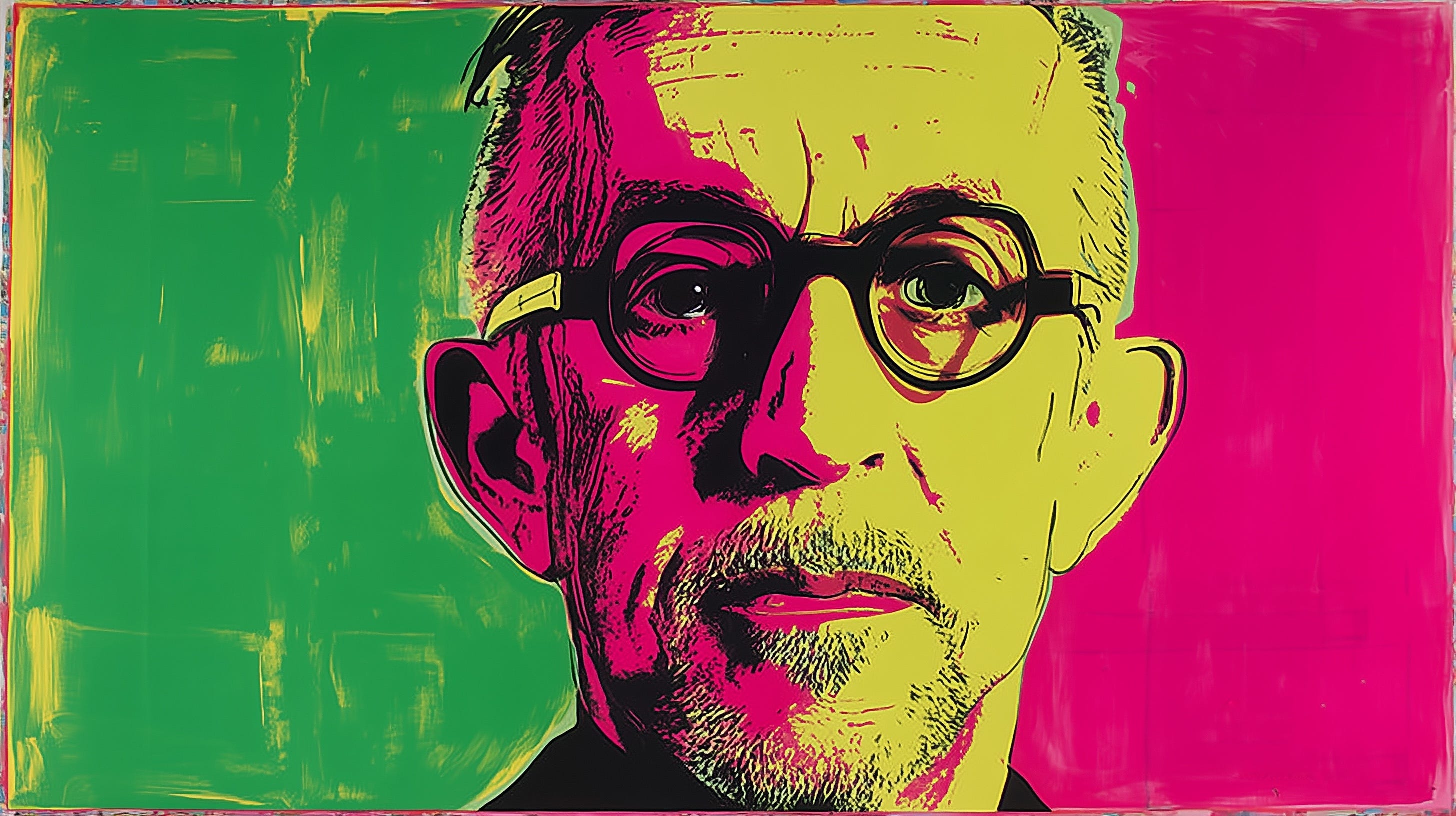
For years, Michel kept a sentence pinned in front of him at work: “I used to be normal, but it drove me mad.” It captured a lifelong instinct—to move away from conformity and embrace the unknown.
Michel Reilhac has a rare vantage point on creativity at the edge. A former contemporary dancer and longtime cultural explorer, he spent a decade as Head of Cinema at ARTE France, where he helped produce and champion bold independent films, including Lars von Trier’s Melancholia.
Drawn consistently to the frontier, Michel later turned his focus to immersive storytelling. Alongside his co-curator Liz Rosenthal, he founded Venice Immersive, now the world’s most important platform for immersive art. Today, he works as an independent story architect and mentor, helping creators navigate uncertainty, embodiment, and risk as new creative forms come into being.
Here are the sharpest insights from our conversation about how to live a creative life.
1. Being normal is a creative dead end.
“There is nothing more reducing, constraining, and reductive than trying to conform—trying to fit a mold that forces you to cut your wings.”
Normality doesn’t just limit creativity—it slowly erases it. The parts of yourself that don’t quite fit, that feel excessive or awkward or out of place, are usually the source of your originality. When you suppress them to be acceptable, you don’t become better—you become flatter.
A more creative life often starts by refusing to shrink yourself to match the room.
2. Embrace the Beginner’s Mind.
“You’re never as good as when you don’t know how to do something.”
Not knowing sharpens attention. Without a script, you’re forced into presence—drawing on intuition, curiosity, memory, and instinct all at once. Creative growth comes from choosing situations where expertise no longer carries you and awareness has to take the lead.
3. If it can’t fail spectacularly, it doesn’t matter.
“The most interesting things are risky and dangerous, but that is exactly why they matter.”
Safe ideas rarely open new territory. Work that can fail spectacularly demands more of you. The ideas that move culture forward often live uncomfortably close to embarrassment, rejection, and catastrophe.
4. Explore the frontier without a map.
“Creating is about doing something that does not exist yet—not referencing anything, almost starting from scratch.”
Much of what we call creativity is recombination—connecting familiar dots. That has value. But breakthroughs happen when you stop referencing what exists and step into the unknown without a map.
Exploring the frontier often feels lonely—not because you’re wrong, but because no one else is there yet.
5. Let go of the past.
“Things happen. People experience them. And then they’re gone. Holding on to the past takes up mental space that should belong to what’s coming.”
Michel isn’t dismissing experience—he’s resisting attachment. When identity hardens around past success or failure, it blocks new work from emerging. Obsession with preservation often comes from fear, not necessity. Creative longevity depends less on what you keep than on what you’re willing to release.
6. Seek creative collisions in the real world.
“Projects are born from people meeting people. Sharing the same moment, the same experience, in the physical world—that is irreplaceable.”
If you want to amplify creativity, don’t stay isolated or fully online. Put yourself in rooms where ideas, disciplines, and people collide. Proximity creates friction. Friction creates momentum. Shared uncertainty turns into shared movement.
Digital tools help—but creativity compounds fastest when people gather, experiment, and build together in the real world.
Closing thought
Michel’s line “I used to be normal, but it drove me mad” isn’t a rejection of discipline or rigor. It’s a refusal to let comfort, conformity, or precedent dull aliveness.
Normal offers safety.
Creativity demands risk.
And the work that matters most almost never feels normal while you’re making it.


